
Web Roundup #001
This is a new thing we’re doing. Every so often we’ll share a few websites we think are worth your time — things we’ve stumbled on, gotten lost in, or keep coming back to. Some are big, some are tiny, some are just one person with a good idea and a domain name. The only rule is that they have to be interesting.
Here’s the first batch.
The Public Domain Review

An online journal about the forgotten corners of cultural history. Long-form essays, curated collections of images, film, and audio — all drawn from works that belong to everyone. Medieval illustrations of comets. Early recordings of birdsong. Victorian guides to electric therapy.
You can tell the people behind it actually love this stuff. The whole thing is not-for-profit, funded by readers and a small shop selling prints and books.
Radio Garden
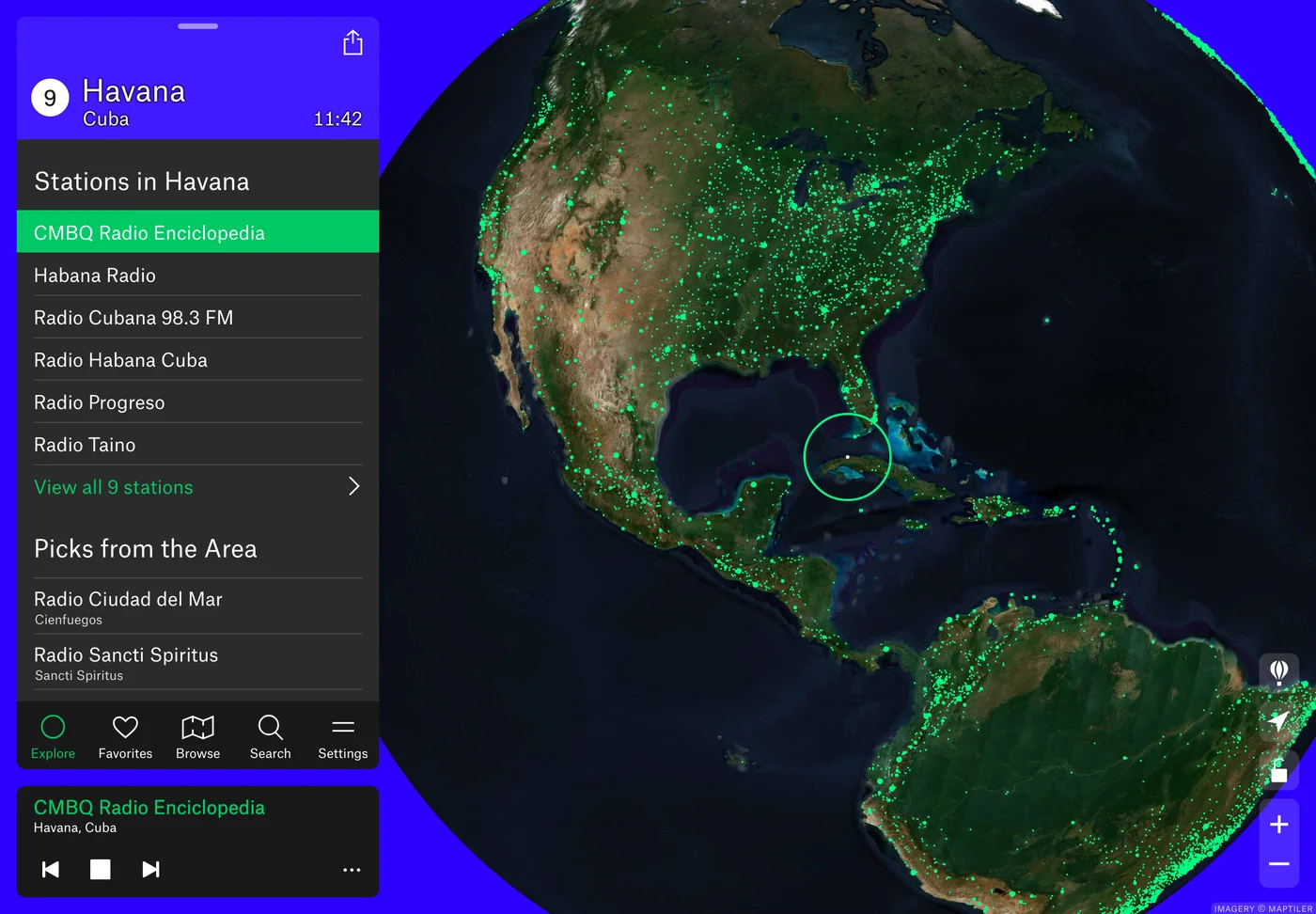
Radio Garden started as a research project at the Netherlands Institute for Sound and Vision, designed by Jonathan Puckey and Luna Maurer. The original question was academic, but what they ended up making was way better than a paper. It’s a globe with 40,000 live radio stations on it. The world and its music, right now, all at once.
You’ll open it to check it out and 45 minutes later you’re listening to a station in Dakar.
Low-tech Magazine

Kris De Decker started Low-tech Magazine in 2007 with a question that most of the tech industry would rather you not ask: what if the old way was better?
Not as nostalgia. As engineering. The magazine publishes deep, research-heavy articles about forgotten technologies — windmills that outperform modern designs, heating systems from the 1800s that are more efficient than what we use today, cargo ships that could run on sails again. Each piece makes the case that the most sustainable technology might already exist, and that we just stopped using it.
And then there’s the website itself. It runs on a server in Barcelona powered by a solar panel. When it’s cloudy for too long, the site goes down. There’s a battery indicator at the top of the page so you know how much juice is left.